

Table of Contents:
- Introduction
- 15 Facts about Lapland (Things to know)
- In which country is Lapland located?
- A Brief History of Lapland
- How to get to Finnish Lapland?
- People of Sami tradition
- Weather in Lapland
- Beware of Rudolph and his pals
- What to wear in Lapland?
- How to plan the perfect trip to Lapland?
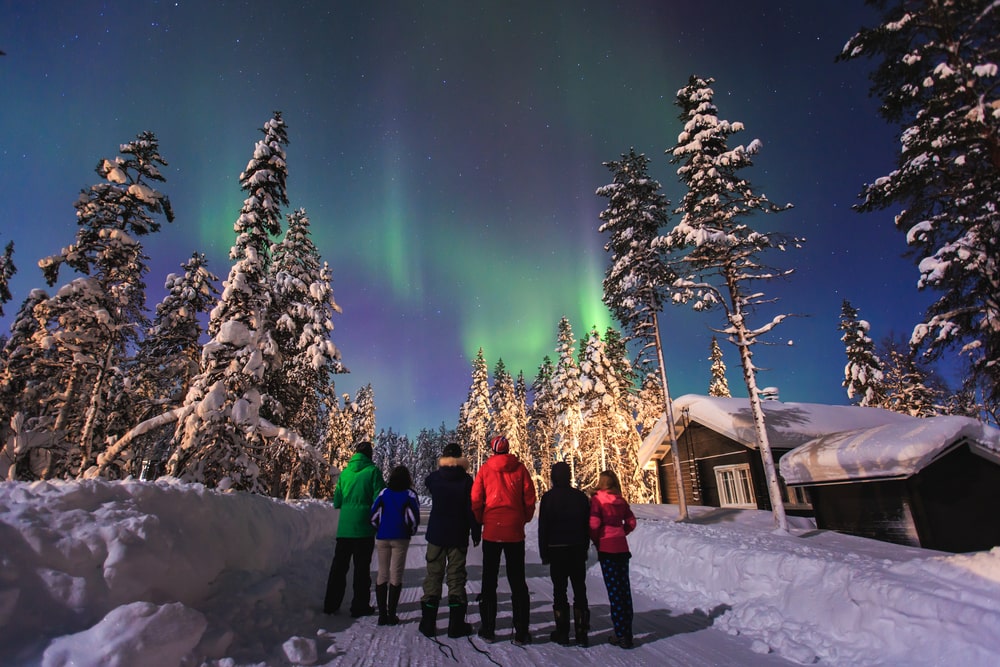
- Don’t only plan for the Nothern lights
- Where to stay in Lapland?
- Is Lapland budget-friendly?
- What is the currency used in Lapland?
- Airports in Lapland
- When to Visit? Ideal Time for travelling to Lapland
- Do I need a visa to travel to Finland?
- Conclusion
Midnight sun!
Northern lights!
Husky sledging!
& Alpine slopes!
These probably come to mind when you dream of seeing Lapland’s mystical landscapes in all its glory.
Well, I can surely tell you that there is more to this northernmost region of Finland than meets the eye. Lapland has one of the most untouched surreal wildernesses in Europe. Nature here is raw and indescribable. From enchanting frozen lakes to endless pine forests, everything you do, smell, feel and eat in Lapland will be associated with natural scenery.
Whether you are planning to visit Lapland or simply looking for a little bit of travel inspiration, here is a list of things you should know!
1. In which country is Lapland located?
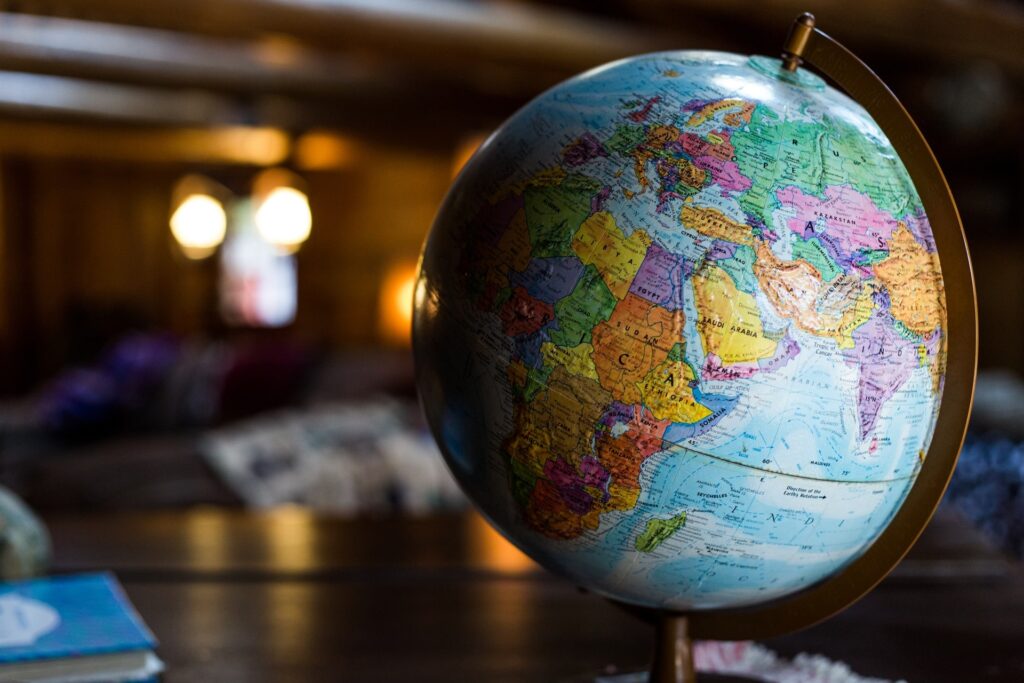
Lapland covers a vast area of land. It is situated in Scandinavia and is often referred to as the northernmost region in Finland. It also makes up about one-third of the country’s total area. It is a region of northern Europe that mainly lies within the Arctic Circle, stretching across, Sweden, Norway, Finland, and even Russia.

2. A brief history of Lapland
Lapland was first inhabited around 7000 years ago after the Scandinavian ice caps began to melt. The Sami people are said to be the first natives of this region. Rock carvings from thousands of years ago have also been discovered showing age-old practices such as reindeer herding which is carried on even today.
However, wars and disputes were prevalent back in the day as they are now in many parts of the world. Such events have had a huge impact on this land and its people. However, when it comes to historical sites, there isn’t anything much to see while travelling to Lapland. This is due to the following events:
- The natives made use of natural resources and Lapland began to develop fruitfully over the middle ages which caught the attention of many powerful countries.
- In the 16th century, Sweden tried to gain more control over the northern areas.
- This combined with other conflicts with Denmark brought about the Knared peace agreement of 1613 where Sweden lost control over the region.
- In 1808 when Sweden had political influence over Finland, troops were to challenge Swiss points in Finland.
- The Fredrikshamn was then signed in 1809, which gave the Swedish control of Finland over to the Tsar.
- This created a new border between Sweden and Finland that exists even to this day.
- The economic conditions were declining and Sami people experienced much collateral damage thereafter.
- Finally, the Fins moved to more prosperous locations clearing large areas of forest and destroying the land that the Sami once used for their reindeer.
3. How to get to Finnish Lapland
Although Finnish Lapland is located in the extreme far north, it is quite easy to get there. All you have to do is, fly into Helsinki, and then from there you can go to either Rovaniemi or Kemi, depending on your final destination. If you are feeling a little adventurous, you can even go between Rovaniemi and Kemi by train for an inter-Lapland adventure.

4. People of Sami tradition (Descendants)
Sami people are known as the indigenous people of the northern part Scandinavian peninsula that live in Sweden, Norway, Finland, and Russia. They have a unique culture, traditions, and ancient languages. Their way of life, clothing, food and music are quite different from other northerners and are seen as quite exotic. Many believe that their traditions are limited to their colourful costumes, catching reindeer with lassos, and traditional handicraft products.
However, there is so much more to the Sami tradition than what is widely known. The Sami heritage is visible even in modern architecture, rap music, and contemporary art. The Sami traditions and culture are still intact even today with over 2,500 people still living within the Smai community. Even in modern times, the Sami people live in the same conditions as they did all those years ago.
5. Weather in Lapland
With its far northerly location, Lapland experiences a subarctic to continental climate. The summers here are quite mild while the winters are cold and snowy.
6. Beware of Rudolph & his Pals
Over two hundred thousand reindeer live in Finnish Lapland and guess what? That is more than the number of people that live there. As a result, if you are in Lapland, and especially if you are driving in Lapland, you are more likely than not to run into, run across or encounter a reindeer or two on the road, at any time of the year
The reindeer may be a sympathetic animal, however, when they roam freely and in large numbers, they become a danger. Therefore, be mindful of your speed and if you see a reindeer crossing the road, by all means, slow down. If you are driving during nighttime or the dark season, it’s advisable to use high beams to detect these creatures.
7. What to wear in Lapland?
Travelling to Lapland? Wondering What to Wear for Your Holiday? Well, to keep it short, LAYERS, and lots of them!! Remember there will be no “bad weather” if you dress accordingly. So, take the cold-weather essentials such as:
- A waterproof/windproof winter jacket
- Snow pants
- A good pair of snow boots
- Thick socks
- Thermals (top and bottom)
- Beanie
- Gloves
8. How to plan the perfect trip to Lapland?
A well-planned trip is always the best kind of trip. First and foremost decide on your destination. That is, which part of Lapland are you hoping to visit on your trip? Afterwards, decide on the accommodation. Are you looking for a fancy hotel with glass ceilings or will a simple budget-friendly hostel suffice? Then decide on what activities and events you are hoping to engage in during your stay and what places you plan on visiting. Finally, check out the best way you can get around in Lapland.
9. Don’t only plan for the Nothern lights
Make no mistake, seeing the northern lights is one of the best things to do in Lapland. However, there are many other things to do in Lapland that will give you lifelong memories as well. For instance:
- Visit the amethyst mines
- Go husky sledging
- Go skiing at the Yllas ski resort
- Head to the Saariselka ski resort for some outdoor sports
- Relive your childhood dreams at the Santa Clause village
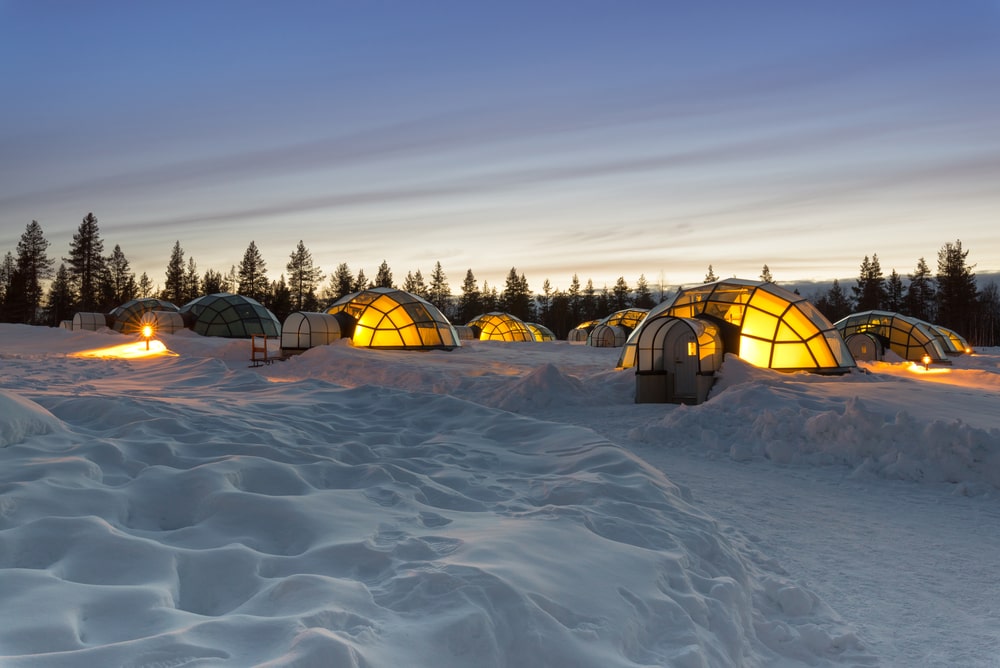
- You can sleep under the stars in a glass igloo
- Meet the Finnish Sami people
- Go on a reindeer safari
- Visit or stay in an ice hotel
10. Where to stay in Lapland
Accommodation in Lapland is quite the experience. You can choose from ski resorts to first-class hotel services and glass igloo stays. Out of all the endless options, the Yllas Ski Resort and a Glass igloo stay are highly recommended for a unique experience during your stay in Lapland.
• Yllas Ski Resort
This is the largest ski resort in Lapland and it offers exquisite nature, unique accommodations and a great array of outdoor activities to its visitors. Yllas transforms into the largest bike park in the country during summer and offers the highest sauna in the whole of Finland. The ski slopes in Yllas are unbeatable by any other ski resort in Finland. Yllas stands out with Finland’s longest and most varied slopes, while its unique location between two Lapland villages allows skiers to explore both in a day. It is a must visit stay if you are travelling to lapland.

• Glass igloo stay
Did you even go to Finnish Lapland if you didn’t stay in a glass igloo? It is the most iconic form of accommodation up in the Arctic Circle. A glass igloo is a perfect stay, especially for a couple or even a group of friends. It’s the perfect way to admire the northern lights, the twinling starry sky and the incredible landscapes all while snuggled up in bed. It is an utterly unique experience that you will only be able to experience in this part of the world.
11. Is Lapland budget-friendly?
Finnish Lapland is certainly not cheap. Accommodation, activities and even food and beverages and quite expensive. As a result, it is difficult to travel to Lapland on a shoestring budget. Backpacking is also not an option here. However, Finnish Lapland will be worth more than anything you would pay for it. It is not only an incredible destination but you will also gain a once-in-a-lifetime experience.

12. Know the Currency Before Traveling to Lapland
The currency of Lapland is the Euro.
13. Airports in Lapland
If you’re travelling to Lapland great to know that, there are six airports in Finnish Lapland operating direct connections with cities all over the world. Each of the airports has its target audience and charm.
- Rovaniemi – The official airport of Santa Claus.
- Kittila – The airport in the hub of tourist centres.
- Ivalo – The airport for wilderness and trekking.
- Kemi-Tornio – You can visit a snow castle right from this airport.
- Kuusamo – The active holidaymaker’s airport.
- Enontekiö Airport – The airport in Sami land
14. When to Visit? Ideal Time for travelling to Lapland
The best time to visit Lapland is the snow-dusted winter season which is from December to April. During these months the snow conditions in Lapland are at their best. This means the landscapes will be covered with the thickest coating of snow you’ll see all year. It is also the best time to see the northern lights. Christmas and New Year’s are also very popular times to visit Lapland with festive spirit filling the air. If you are travelling with little ones, you can even take them to meet the big man in red if you visit in December.
15. Travelling to Lapland requires a Visa?
If you are planning a travel to Finland from UK, the simple answer is that will NOT require a visa to travel. Since Finland is a part of the Schengen Agreement, the nationals of its 26 member countries can cross Finnish borders without a visa. This includes travellers from the UK, New Zealand, Canada, Japan, USA and Australia.
In summary, visiting Lapland will be one of the most incredible, once-in-a-lifetime experiences that you will ever have. It is truly an otherworldly place with many interesting things to do, see and discover.
